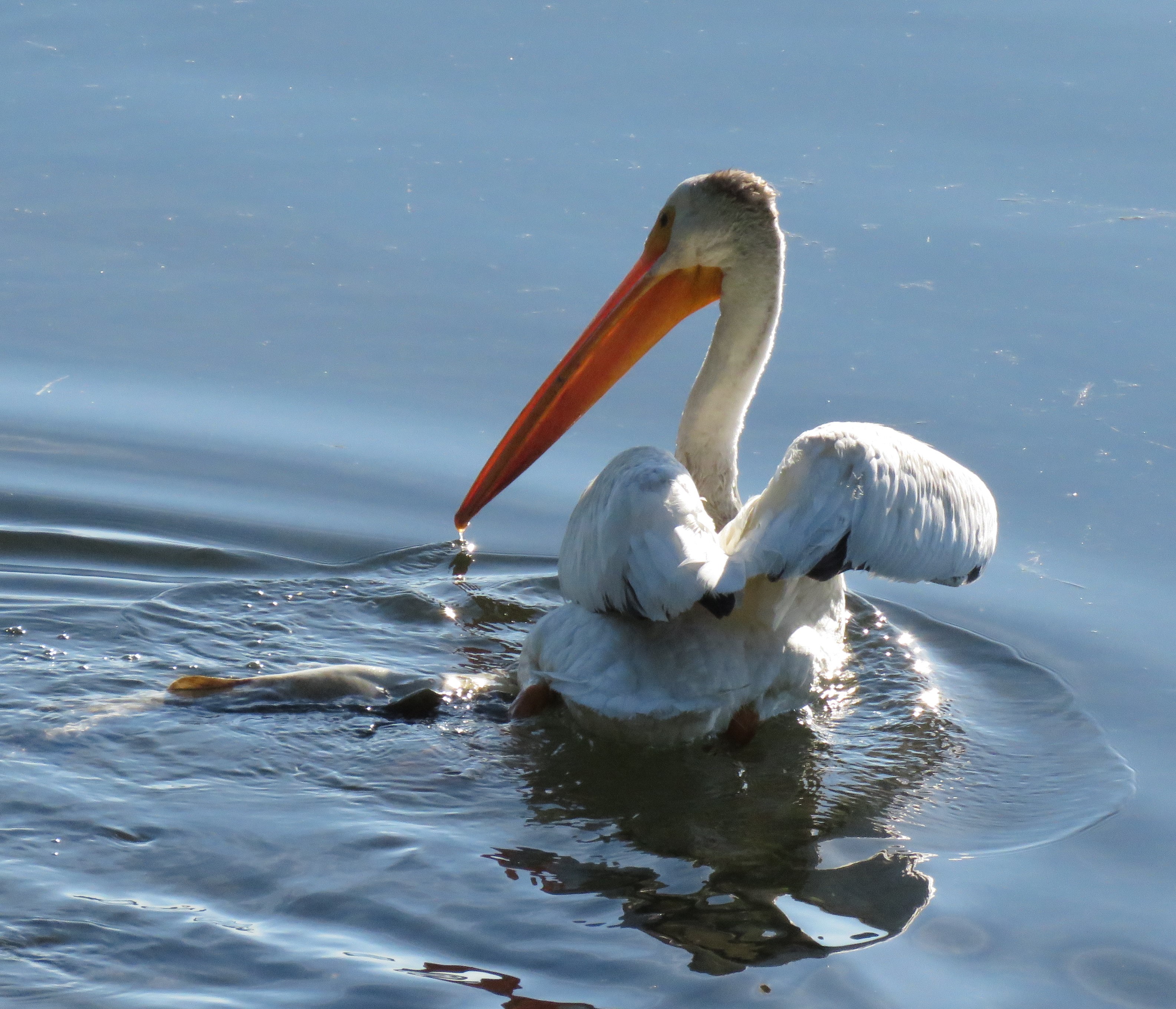
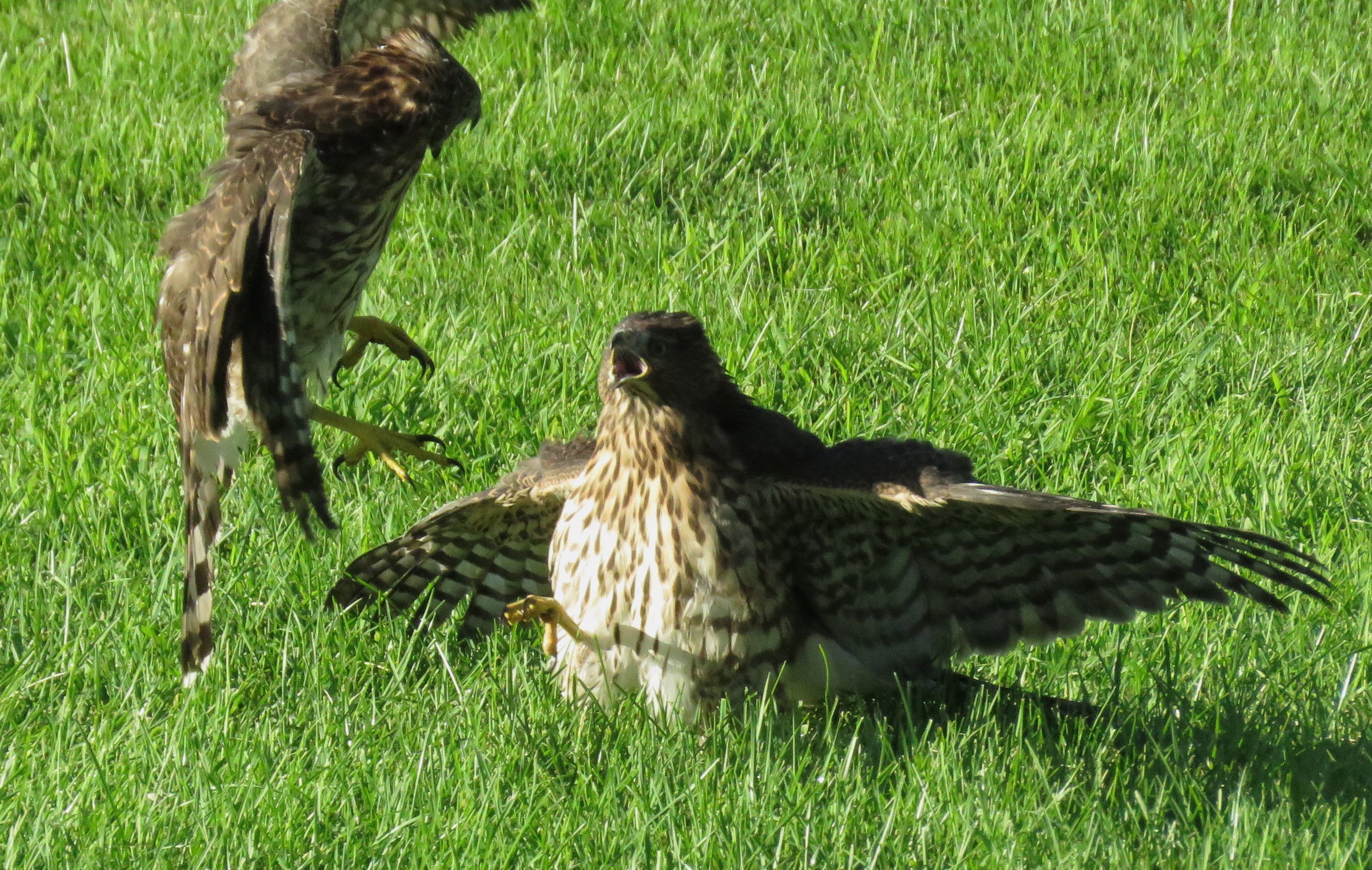
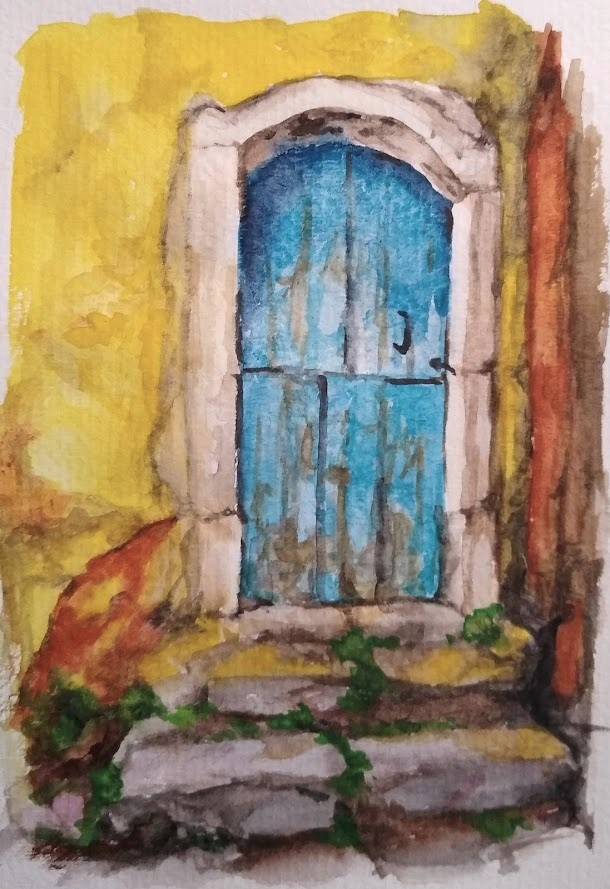
I may need to change the subtitle of this blog to "Birds...birds...birds...can't go wrong there."
I just got accepted into the Seattle Audubon's Master Birder (education-for-service) program!
So I may be posting here a lot more about birds -- you know, as opposed to all that other non-bird stuff I post about. Oh, wait, that's not really a big change, is it?
I'm excited!
Well, truth to tell, I had some serious doubts about whether to do this, and the application process was competitive and HARD (it included a tough bird ID quiz which humbled me), but when I got the news, I realized there was no way I would ever turn down such an amazing opportunity. Basically, the program teaches you intensively about Washington state birds (starting this September and ending I believe in June) with classes and field trips, in exchange for which you donate volunteer hours for Seattle Audubon.
Now I'm going to go post the same news on my other blog!
Whee!
Alexandra MacKenzie
Art...birds...books. Can't go wrong there.
Tuesday, May 29, 2012
Monday, May 21, 2012
Back to work
I haven't updated in ten days because I was here:
and here, too:
and also here:
I had a fine vacation hither and yon. Desert, mountains, rivers, islands -- and all without leaving the wonderful State of Washington. And nearly all of it rain-free. Plus there were birds, both ordinary and extraordinary.
Well, truth to tell, all birds are extraordinary in my book!
Friday, May 11, 2012
Bird Haiku
Regular readers may have noticed by now that I like to draw and paint birds. What you may not know is that they task me, those birds. They simply won't sit still to have their portrait painted.
Thus I use photos to paint from, but photos task me, too. I may take 100 photos of the same bird and discover that every single photo is too dark, too overexposed, shows a weird angle or there are branches in the way or it's all completely out of focus. Photoshop can only do so much.
I thought I might learn a few tips from a wonderful book, Capturing the Essence: Techniques for Bird Artists by William T. Cooper, whose work is stunning. I did learn a few things, but he strongly stressed field studies, with photos a secondary aid. Rats. His field sketches were so detailed! What was his secret? No secret at all -- it was simply what every creative person already knows about how to improve -- PRACTICE.
Sigh. So I took my sketchbook next time I went birding, and I ran across a Great Blue Heron down at Yesler Swamp, and thought, "OOh, perfect! Herons often spend HOURS standing in the same position."
Ha. Not THIS pesky bird. He walked a ways, paused for 5 seconds, walked a ways, stopped to look at the water for 5 seconds, ambled on again...he simply refused to stand still. But you have to start somewhere, so I sketched what I could in those few seconds. (You might remember these quick sketches from last week's blog post.)
I showed the results to a friend, who instantly dubbed them "Bird Haikus". !! What a lovely notion -- trying to capture the essence of the bird in as few strokes as possible.
Armed with the poetic approach to field sketching, I went back out the next weekend and found two robins foraging. I parked myself on the campstool, whipped out the sketchbook, and went to work.
Thus I use photos to paint from, but photos task me, too. I may take 100 photos of the same bird and discover that every single photo is too dark, too overexposed, shows a weird angle or there are branches in the way or it's all completely out of focus. Photoshop can only do so much.
I thought I might learn a few tips from a wonderful book, Capturing the Essence: Techniques for Bird Artists by William T. Cooper, whose work is stunning. I did learn a few things, but he strongly stressed field studies, with photos a secondary aid. Rats. His field sketches were so detailed! What was his secret? No secret at all -- it was simply what every creative person already knows about how to improve -- PRACTICE.
Sigh. So I took my sketchbook next time I went birding, and I ran across a Great Blue Heron down at Yesler Swamp, and thought, "OOh, perfect! Herons often spend HOURS standing in the same position."
Ha. Not THIS pesky bird. He walked a ways, paused for 5 seconds, walked a ways, stopped to look at the water for 5 seconds, ambled on again...he simply refused to stand still. But you have to start somewhere, so I sketched what I could in those few seconds. (You might remember these quick sketches from last week's blog post.)
I showed the results to a friend, who instantly dubbed them "Bird Haikus". !! What a lovely notion -- trying to capture the essence of the bird in as few strokes as possible.
Armed with the poetic approach to field sketching, I went back out the next weekend and found two robins foraging. I parked myself on the campstool, whipped out the sketchbook, and went to work.
The robins moved about a lot more than the pesky heron, quickly darting over the grass, grabbing a bite of whatever it was they were finding there, pausing ever so briefly to glance up and around for signs of danger...
They made fabulous bird haiku subjects.
That bottom one is starting to veer away from haiku into a cartoon character, though.
I'm not sure how well these sketches will help when it comes to painting, but it sure is fun, and challenging. I'm normally a very detailed, analytical artist who overthinks and overdraws much of the time, and this forces me (in a really good way) to loosen up, to let the pencil fly lightly over the paper, and to pay attention to the overall character of the bird.
Haiku...not just for poets any more!
Saturday, May 5, 2012
Dogwood
A silly notion got hold of me today, and I wound up painting this as a result:
I have nothing to say in my defense other than, "Well, it seemed like a good idea at the time!"
Thursday, May 3, 2012
Unexpected Encounters
The past two weekends, I've encountered a Great Blue Heron at close quarters down at Yesler Cove (part of the Montlake Fill), and I'm pretty sure it's the same bird, as it is completely unconcerned about the presence of people. Well, at least, it wasn't concerned about me, as I was the only person around down there.
There's a narrow trail to the Cove that winds through Yesler Swamp. In the first encounter, I came round a bend to see the bird nonchalantly sauntering down the trail about 10 feet ahead.
It looked back at me, then continued on, and went fishing in the reeds while I stood nearby to watch the birds in the Cove.
In the second encounter, I'd just finished sketching some gnarled trees at the water's edge...
...and was packing up to leave when the heron flew in, and began fishing in the water/reed beds that parallel the trail. As I slowly walked back along the trail, the bird kept pace. It didn't stop for more than a few seconds at a time so I wasn't able to do a drawing, but I did get in a few very quick impressions.
There's a narrow trail to the Cove that winds through Yesler Swamp. In the first encounter, I came round a bend to see the bird nonchalantly sauntering down the trail about 10 feet ahead.
It looked back at me, then continued on, and went fishing in the reeds while I stood nearby to watch the birds in the Cove.
In the second encounter, I'd just finished sketching some gnarled trees at the water's edge...
...and was packing up to leave when the heron flew in, and began fishing in the water/reed beds that parallel the trail. As I slowly walked back along the trail, the bird kept pace. It didn't stop for more than a few seconds at a time so I wasn't able to do a drawing, but I did get in a few very quick impressions.
At one point, the heron actually strolled from the lefthand reeds to the righthand reeds -- straight across the trail in front of me, only three feet away.
It was amazing, and even a tad intimidating -- that's one powerful bill! But as I said, this particular bird is extremely focused on finding fish (which it did), and totally disinterested in humans.
A beautiful bird and a wonderful encounter.
Thursday, April 26, 2012
Practice, Practice, Practice
I used to often take my lunch at work by eating at my desk, and getting interrupted a lot with work. I got mildly chastised recently for this by the new boss, who encouraged me to put up an "at lunch" sign, ignore work distractions, and do something more fun for an hour each day.
So I brought in my colored pencils and ink pens and a lavishly illustrated book on birds, and started spending my lunch hour doing practice pieces.
Practice pieces are just copying someone else's art in order to 1) learn how they got the effects they got, 2) hone one's freehand drawing skills, and 3) have a bit of relaxed, fun art time without worrying over how it turns out. Since it's not your own original art, it doesn't matter how it turns out.
The book I've got at work is "Birds: Their Life, Their Ways, Their World" by Christopher Perrins, and the illustrations are by Ad Cameron. The book covers birds from all over the world with hundreds of lovely illustrations covering identification, habitat, breeding, feeding, behavior, etc.
I normally do one piece during each lunch hour, sometimes two if things are going well. I sketch the bird lightly in pencil first, then either finish with pen-and-ink, or water-soluble colored pencils, or both. It's changed my whole attitude towards Lunch Hour. Now, staying at my desk is something I look forward to.
Tuesday, April 24, 2012
Highlights from the Woodland Park Zoo
Which means bird photos...
This past Saturday I popped on over to the Woodland Park Zoo, where there are lots and lots of animals which are not birds, yet for some reason, 90% of the photos I took were of birds. Go figure.
That's a Great Gray Owl. They have a pair of these amazing BIG owls, who are very attentive to everything around them.
This past Saturday I popped on over to the Woodland Park Zoo, where there are lots and lots of animals which are not birds, yet for some reason, 90% of the photos I took were of birds. Go figure.
That's a Great Gray Owl. They have a pair of these amazing BIG owls, who are very attentive to everything around them.
Over at the raptor exhibit area, a zookeeper held this Peregrine Falcon -- all I could think of was how challenging it would be to try painting that incredible patterning.
This is one of the many birds flying free in the large enclosed African bird area -- a Southern Masked Weaver Bird working on its extremely complex, intricate nest.
And here we have a Golden-breasted Starling from the same exhibit area -- who knew Starlings could be so attractive?
This has to be my favorite bird from the African area simply on name value alone -- it's called a Speckled Mousebird. Love that tufty head!
And now we venture far from Africa to another continent, and the little Humboldt's Penguin. The penguins have a lovely new, larger area with glass viewing windows beside the water.
Finally, my favorite bird at the zoo, the recently acquired Steller's Sea Eagle -- these are rare birds from the Kamchatka Peninsula and the zoo has a pair which they hope to breed as part of a re-population effort. Slightly bigger than our Bald Eagles and pretty darned impressive. The enclosure is big enough for them to make short flights.
Preparing for take-off
While it's naturally not as satisfying as seeing these birds in the wild, most of them I never WILL see in the wild. The zoo's efforts are focused on conservation and repopulation of rare species, so maybe someday there will be more of these wonderful birds back where they belong.
Subscribe to:
Posts (Atom)